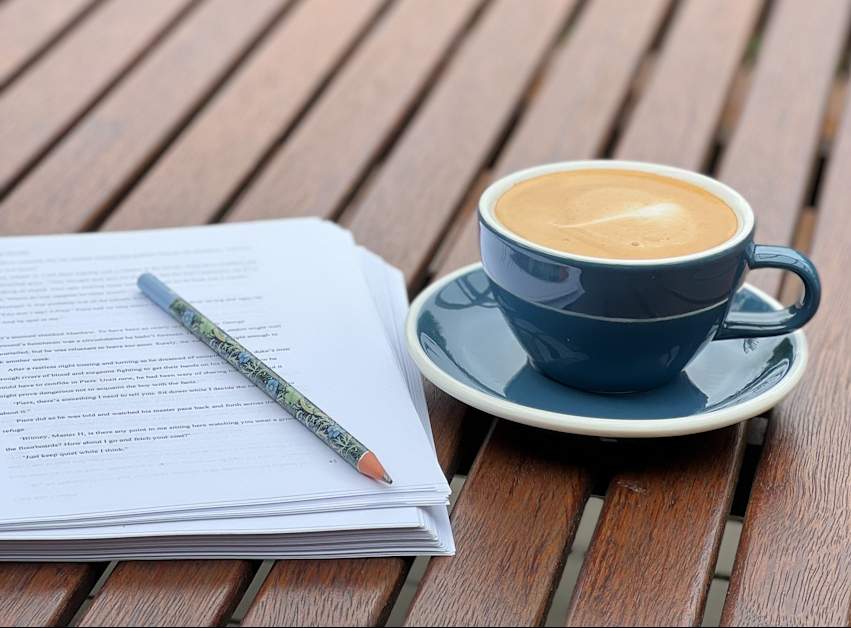
A dear friend recently asked if I was at all interested in reading, and providing some thoughts, on her completed manuscript. It’s the first in a generational family saga that she’s been working on for several years, and she has completed further books in her series. I’d previously read small excerpts and thought they were great.
But, what an undertaking, that I hadn’t really thought through, other than doing a favour for a friend.
When I was sent the hefty 600 page, 185,000 word document, there was some hefty momentary panic. What have I done? What did my friend (we’ll call her Jane) really want from me in the way of ‘my thoughts’ on her book? And if it was truly terrible work, what could I say?

But I gave it my all, and after several weeks of reading and then thinking on what I’d read, provided Jane with my edits. A bit of copy and line editing, spotlighting story structure and dialogue clunks, highlighting sections with a suggestion of a ‘rephrase’ or a ‘revise’. And at the end, a few paragraphs on the story itself, what I loved about the characters and their journeys, what I felt could be worked on a bit more, where the story lagged. And a recommendation that the word count be reduced, as hard as I knew that would be. With trepidation I sent all this back, and waited anxiously for a response. A week went by. Then two. Had I deeply offended dear Jane? Had I taken too long and she wasn’t really interested in my opinion any longer? Had I completely misinterpreted her, ‘would you be interested in reading this’ to actually mean, ‘by all means, get the red pen and scratch all over my beautiful words’?
‘by all means, get the red pen and scratch all over my beautiful words’
But, dear reader, she did respond, first with an apology, some of her emails weren’t syncing and my email hadn’t been seen. And secondly, with gratitude for the obvious time and effort I’d put into the manuscript, she agreed to most of my suggestions and the word count cull has begun.
It made me think, if the roles were reversed, what would I want and need to hear from my friends and fellow writers? And what can I learn about editing, both from this experience and from those brave souls that have gone before?
Some Lessons I Learnt
- As hard as it can be, it is best to be honest. Frame your words so they’re not brutal, but it is kinder to be truthful.
- Find out exactly what type of editing is being asked of you. This was my biggest mistake.
- Be realistic with a timeframe for your response, both to yourself and to the writer. It takes longer than you think.
What surprised me most about all the above, was the second lesson, and the many and varied types of editing services you can provide.
Does the writer want you to read their work, and give a sentence or two on what you thought of their story? Or a more in-depth analysis on structure, narrative drive, character development? Or, do they want you to check whether the commas or full stops are in the right place, and that you haven’t mixed up Robert and Bob and Richard and Dick, and called Robert by his nickname Bobby every third page.
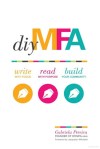
Gabriela Pereira, of DIY MFA fame, has the perfect chapter in her fantastic guidebook, DIY MFA: Write with Focus, Read with Purpose, Build Your Community, that provides an explanation of the two types of feedback a writer needs:
“Critique centers on the writer’s perspective, while discussion is about the reader’s experience.” (page 220)
Gabriela delves a little further to explain that a critique session is between fellow writers, to help improve a piece of writing, and, importantly, before it is submitted for publication. After publication, you should only evaluate the writing as readers, as if you were in a book club, talking about what you liked and didn’t like, your interpretations of what the writer was trying to convey. Here’s a little more on the topic: Critique Versus Discussion.
Over at dailywritingtips.com I found a useful bit of advice on Critiquing versus Editing:
‘It’s helpful to have others read our work and comment on structure, story line, believability … Critiques should be honest in pointing out plot weaknesses, omissions, and other flaws, but they shouldn’t attempt to recast the author’s work according to the reader’s vision’.
So, did Jane want me to take a look at her manuscript as a fellow writer, or as a fellow reader? And had I just become an alpha reader or a beta reader, terms I’d heard loosely before but was never sure on the difference. A blog post by Leigh Pierce on IngramSpark provides the perfect explanation of the difference, and adds these sentiments worthy of repeating here,‘…it’s something I truly believe all writers need. We make each other better … so choose people who lift you up and make you and your writing better.’
‘so choose people who lift you up and make you and your writing better.’
Leigh Pierce
Would I do this again? I’m not sure. But what I do know for certain, is to establish right at the start what type of editing is being asked of me, or if I’m to be an alpha or beta reader, a copy editor, or all of the above. And gosh, do I appreciate that it takes courage and bravery to give your hard fought words on the page to another, for them to pick at it, pull on those loose threads, and return it, a little broken, a little (or a lot) marked up. Your editor or reader has also invested a good chunk of their time on it, so be respectful of that. I learnt some valuable lessons about editing, but also the writing process itself on this project, and you know what, yes, I think I’d do it again.
And in the meantime, I’ll be back to the self-edits of my own manuscript, and my dear friend Jane, once she is comfortable with the final word count, is off to prospective agents and publishers. Wish us both luck!
n.b. purely coincidentally, as I was taking a snack break from writing this blog post, an episode from the wonderful Joanna Penn at The Creative Penn podcast rolled in, with Tiffany Yates Martin, having a great discussion on Intuitive Editing – listen here.
Bedside reading:Big Magic: Creative Living Beyond Fear, by Elizabeth Gilbert, of Eat Pray Love fame. A beautifully simple guide which is definitely helping with my creative mojo struggles right now.
What’s on Audible:Go Tell the Bees that I am Gone, by Diana Gabaldon. All 49 and a half glorious hours of it.
What’s on Podcast:Ctrl Alt Delete with Emma Gannon – today’s podcast guest is Delia Ephron. Need I say more?


 Gathering Words
Some sage words here, Jess. It is indeed a tricky area when you have to read and critique someone else’s baby. We had to do quite a bit of peer reviewing and critiquing for my degree, and when I read and commented on someone else’s work I always tried to be positive first, then make helpful suggestions, while all the time the phrase ‘tread carefully, for you tread on my dreams’ rang in my ears.
LikeLiked by 1 person
Thanks Alli. Gosh I can’t imagine attempting peer reviewing. Starting off a review with positive comments was a key point in several ‘how to’ pieces I read, and if the coin was flipped I’d certainly like my reviewer to begin gently too (haha!).
LikeLiked by 1 person
Indeed, Jess, we all need to be handled with care! You’re right though, peer reviewing is a nightmare, especially when you’re working on an online course when you don’t know the people whose work you’re reading. :-0
LikeLike
This is always a tough one, especially when you’re looking over a friend’s work! Even when I’m working as a professional editor I find myself struggling with some of these things. Someone will hire me for a copy edit, but I read the book and realise that it actually needs a developmental edit. Things can get tricky very quickly! As you said, though, the number one key is always honesty. Thanks for this great post! 😊
LikeLiked by 1 person
Thanks so much E.J. for your comments! 😊
LikeLiked by 1 person